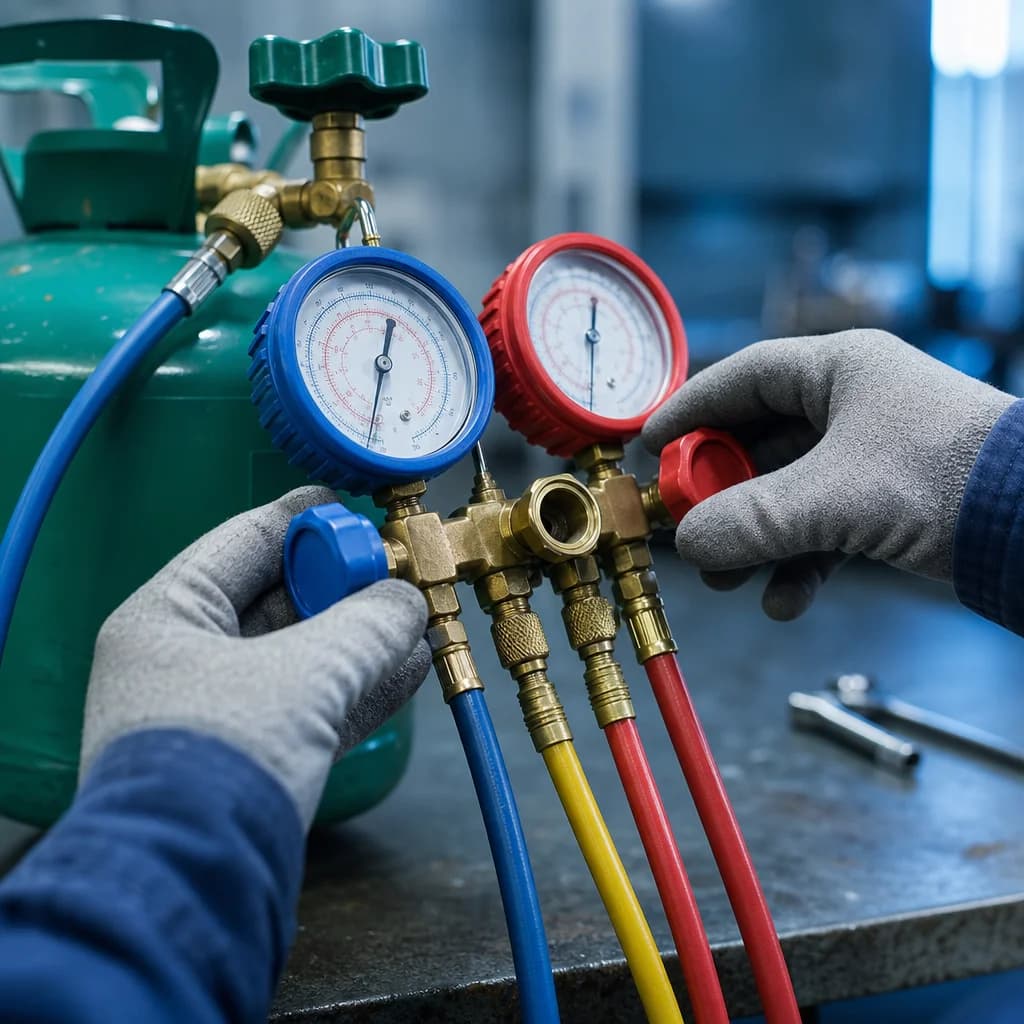
R134a is still one of the most widely used refrigerants in the United States, serving millions of vehicle air conditioning systems, commercial coolers and small sealed appliances. If you maintain equipment built in the last three decades, there is a good chance R134a is part of your workflow.
This guide explains what R134a is, where it is used, how U.S. regulations treat small cans differently from bulk cylinders, what influences pricing, how much a system typically holds, and how R134a compares with R1234yf.
Everything below is written for buyers in the U.S. market. Regulations change, so treat this as an orientation and verify current requirements with the EPA and your state before purchasing.
What Is R134a Refrigerant?
R134a (HFC-134a, also sold as Tetrafluoroethane) is a single-component hydrofluorocarbon refrigerant. It became the mainstream replacement for R12 in automotive air conditioning and in many medium-temperature refrigeration systems because it contains no chlorine and therefore does not deplete stratospheric ozone.
Because it is a pure refrigerant rather than a blend, R134a can be charged as a liquid or a vapor without the fractionation concerns that come with zeotropic blends. That simplicity is one reason it stayed in service across so many different equipment types for decades.
Key characteristics at a glance
- Chemical family: HFC (hydrofluorocarbon), single component
- Ozone depletion potential: zero — it contains no chlorine
- Global warming potential: high compared with newer HFO alternatives, which is why it is being phased down
- Typical service fittings: 1/2 in. ACME on bulk cylinders, and can-taps on small MVAC cans
- Common cylinder sizes in the U.S. market: 30 lb bulk cylinders and small self-sealing cans
Common Uses For R134a
R134a is one of the most widely installed refrigerants in North America. You will still find it across vehicle fleets, commercial refrigeration and a long list of smaller sealed systems.
Automotive air conditioning
Most passenger vehicles built between the mid-1990s and the mid-2010s use R134a in their mobile air conditioning (MVAC) systems. Many light trucks, agricultural machines and older fleet vehicles remain on R134a today.
Commercial and retail refrigeration
Beverage coolers, reach-in display cases, vending machines, ice machines and small walk-in systems commonly run R134a at medium-temperature conditions.
Appliances and small sealed systems
Household and light commercial refrigerators, dehumidifiers, water coolers, portable air conditioners and some chillers were also built around R134a.
Is R134a Legal In The USA?
Yes. R134a remains legal to buy, sell and use in the United States, but it is a regulated substance rather than a general-purpose consumer product. Requirements differ depending on the package size, the equipment it is intended for, and who is buying it.
- R134a is an HFC, so it is subject to the U.S. HFC phasedown administered by the EPA under the AIM Act. Allowances are stepped down over time, which affects long-term supply and pricing.
- Sales of refrigerant intended for motor vehicle air conditioning are governed by EPA Section 609 rules, including technician certification for servicing MVAC systems.
- Sales of refrigerant for stationary refrigeration and air conditioning equipment fall under EPA Section 608 and the refrigerant sales restriction.
- Venting refrigerant to the atmosphere during service, maintenance, repair or disposal is prohibited. Recovery equipment must be used.
Certification requirements are product- and use-specific. Depending on what you are buying and what it will be used in, EPA Section 608 or Section 609 certification may be required. Always confirm the current federal, state and local requirements that apply to you before purchasing.
Automotive Cans vs Bulk Cylinders
This is the single most misunderstood point about buying R134a in the U.S. Small MVAC cans and bulk cylinders are not treated the same way.
Small MVAC cans
- Small self-sealing cans sold for do-it-yourself car AC top-ups are regulated under EPA Section 609.
- They must use a self-sealing valve and carry the required labeling and warnings.
- Some U.S. states and localities impose additional restrictions, deposits or point-of-sale rules on small cans.
Bulk cylinders
- Bulk cylinders — for example 30 lb R134a cylinders with a 1/2 in. ACME fitting — are intended for professional service work.
- Buyers may be required to hold and document appropriate EPA certification, and suppliers may need to verify it before shipment.
- Bulk cylinders ship as regulated goods and must be transported, stored and handled accordingly.
If you are unsure which category you fall into, contact us before ordering. We would rather help you get the right product the first time than have you buy something you cannot legally use.
R134a Price Factors
R134a pricing moves more than most buyers expect, and it is rarely about a single factor. These are the variables that most often drive the number you see at checkout.
- Cylinder size: cost per pound almost always drops as cylinder size increases, so a 30 lb cylinder is usually more economical than small cans.
- HFC allowance supply: the federal HFC phasedown reduces available production and import allowances over time, which tightens supply.
- Seasonality: demand spikes in late spring and summer as cooling season starts, and pricing often follows.
- Freight and hazmat handling: refrigerant cylinders ship as regulated goods, and freight cost is a real component of delivered price.
- Quantity purchased: pallet and multi-cylinder orders typically carry better per-unit pricing than single-cylinder purchases.
- Packaging and brand: factory-sealed, clearly labeled cylinders from established producers price differently than unbranded stock.
Because the market moves, we publish current pricing directly on each product page rather than quoting fixed figures in this guide.
Where To Buy R134a Refrigerant
R134a is sold through several channels in the U.S., and each one suits a different type of buyer.
HVAC and refrigeration wholesalers
Traditional wholesale counters serve licensed contractors and carry bulk cylinders, but they generally require an account and in-person pickup.
Auto parts retailers
Auto parts stores typically stock only small MVAC cans and recharge kits, not bulk cylinders. Availability and pricing vary widely by state.
Online refrigerant suppliers
Ordering online gives you transparent pricing, published cylinder sizes and direct shipping. At RefrigDirect we ship factory-sealed cylinders from a certified U.S. warehouse, usually within 1–3 business days, with free shipping on continental U.S. orders.
- Factory-sealed cylinders with clear product labeling
- Published cylinder sizes and fittings on every product page
- Ships from a certified U.S. warehouse — no overseas transit times
- Compliance checks applied to orders where certification requirements apply
- Support from people who work with refrigerant every day
How Much R134a A System May Need
Charge quantity is always determined by the equipment, never by a general rule of thumb. The figures below are typical ranges only, provided to help you estimate how much product to order.
- Passenger car and light truck AC systems: often in the range of roughly 1.5 to 3 lb of total system charge.
- Larger vehicles, RVs and equipment cabs: frequently higher, and sometimes considerably so.
- Reach-in coolers and small commercial refrigeration: varies widely by cabinet size, line length and condenser location.
- Service work on multiple units: a 30 lb bulk cylinder is usually the more practical purchase.
Always charge to the manufacturer specification listed on the equipment nameplate or in the service manual. Overcharging and undercharging both reduce performance and can damage the compressor.
R134a vs R1234yf
Newer vehicles have largely moved to R1234yf, an HFO refrigerant with a much lower global warming potential. Understanding the difference matters because the two are not interchangeable.
R134a
- Installed in a very large existing fleet of vehicles and equipment
- Widely available in both small cans and bulk cylinders
- Non-flammable under standard classification
- Higher GWP, and subject to the ongoing HFC phasedown
R1234yf
- Standard in most newer vehicle platforms
- Substantially lower global warming potential
- Classified as mildly flammable, which changes handling and equipment requirements
- Typically higher cost per pound than R134a
Do not substitute one for the other. Use the refrigerant specified on the vehicle or equipment label. Retrofitting requires the correct procedure, fittings, lubricant and labeling.
Safety And Handling
R134a is a pressurized liquefied gas. Treat every cylinder as a pressure vessel and follow the manufacturer safety data sheet.
- Wear safety glasses and gloves — liquid refrigerant can cause frostbite on contact with skin or eyes.
- Work in a well-ventilated area. Refrigerant vapor displaces oxygen in confined spaces.
- Never heat a cylinder with an open flame and never exceed the rated fill level.
- Store cylinders upright, secured, away from heat sources and direct sunlight.
- Use recovery equipment. Venting refrigerant during service, maintenance, repair or disposal is prohibited.
- Do not mix refrigerants in a cylinder or a system, and never introduce compressed air into a charging line.
Certification And Purchase Requirements
Refrigerant sales in the United States are restricted, and the rule that applies depends on the product and its intended use.
- EPA Section 608 covers technicians who service stationary refrigeration and air conditioning equipment, with Type I, Type II, Type III and Universal categories.
- EPA Section 609 covers technicians who service motor vehicle air conditioning systems.
- Depending on the product type and use, proof of the appropriate certification may be required before a sale can be completed.
- State and local rules can add requirements beyond the federal baseline.
Official guidance on the refrigerant sales restriction, Section 608 technician certification, the HFC phasedown and ozone-depleting substance phaseout is published by the U.S. Environmental Protection Agency. We recommend reviewing the current EPA material for your situation, since requirements are updated over time.
Why Buy R134a From RefrigDirect
We supply HVAC and refrigeration professionals across the United States, and the buying experience is built around getting you the right cylinder quickly.
- Factory-sealed cylinders shipped from a certified U.S. warehouse
- Typical delivery in 1–3 business days, with free shipping on continental U.S. orders
- Clear product specifications, cylinder sizes and fittings on every listing
- Secure, encrypted checkout and order tracking
- Responsive support if you need help matching a refrigerant to your equipment
Frequently Asked Questions
Do I need certification to buy R134a?
It depends on the product and the intended use. Small self-sealing cans sold for motor vehicle air conditioning fall under EPA Section 609 rules, while bulk cylinders for stationary equipment fall under the Section 608 sales restriction and may require documented certification before purchase. Confirm the requirements that apply to you before ordering.
Is R134a being phased out in the United States?
R134a is not banned, but as an HFC it is included in the U.S. HFC phasedown administered by the EPA under the AIM Act. Production and import allowances step down over time, which gradually reduces supply and influences pricing. Many new vehicles have already transitioned to R1234yf.
Can I use R134a in a system designed for R1234yf?
No. Use only the refrigerant specified by the equipment or vehicle manufacturer. The two refrigerants have different properties, service fittings and handling requirements, and substituting one for the other is not an approved practice.
What size R134a cylinder should I order?
For professional service work covering multiple systems, a 30 lb bulk cylinder is usually the most economical option per pound. For a single small top-up on a vehicle, a small MVAC can may be sufficient — provided it is legal for you to purchase and use in your state.
How is refrigerant shipped?
Refrigerant cylinders are regulated goods and ship accordingly, in approved packaging from our U.S. warehouse. Most continental U.S. orders arrive within 1–3 business days and qualify for free shipping.
Can I mix R134a with another refrigerant to top off a system?
No. Mixing refrigerants contaminates the charge, makes recovery and reclamation far more difficult, and can damage equipment. Recover the existing charge, repair the leak, and recharge with the correct refrigerant to the manufacturer specification.
What is R513A and why is it mentioned alongside R134a?
R513A is a lower-GWP blend often used as an alternative in systems and applications where R134a has traditionally been used. Suitability depends on the equipment, so check the manufacturer guidance before considering any changeover.
Do you ship R134a to every U.S. state?
We ship across the continental United States, but some states and localities apply additional restrictions to refrigerant sales — particularly small cans. If a restriction applies to your address, our team will contact you before the order ships.
Recommended Products & Collections
Disclaimer: This guide is for general information only. Always follow federal, state, and local regulations and consult a licensed HVAC professional.